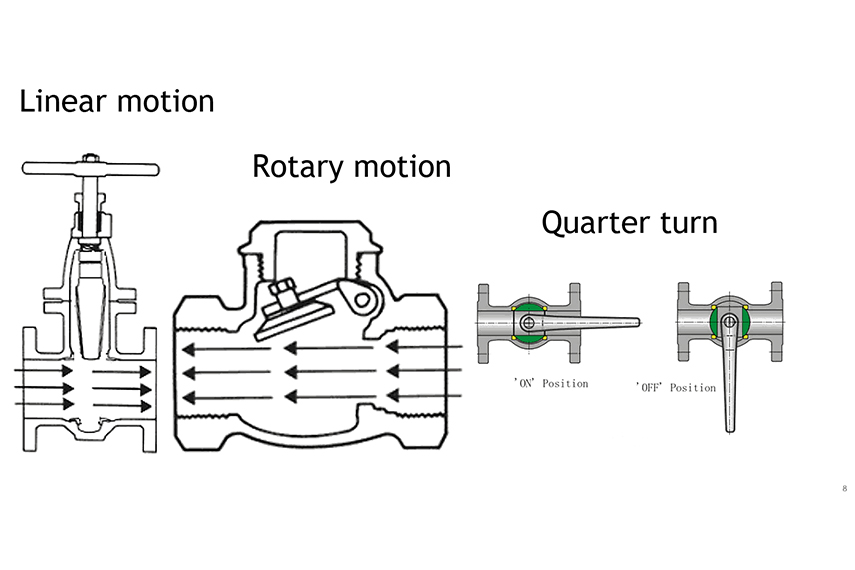
Research: What are the differences between Quarter-turn & Multi-turn valves?
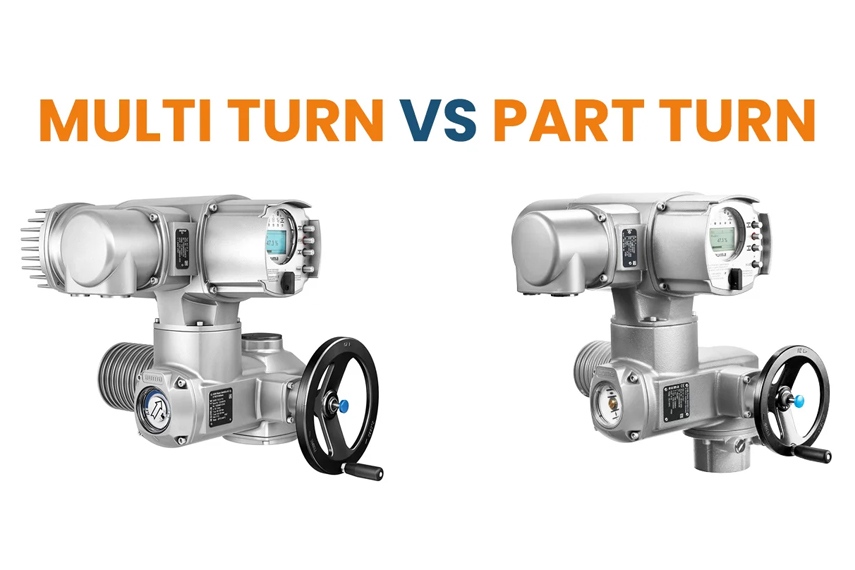
Quarter-turn valves and multi-turn valves are two common types of valves, and their primary differences lie in the operation method, working principle, applications, and other aspects.
1. Operation Method and Rotation Angle
Quarter-turn valve:
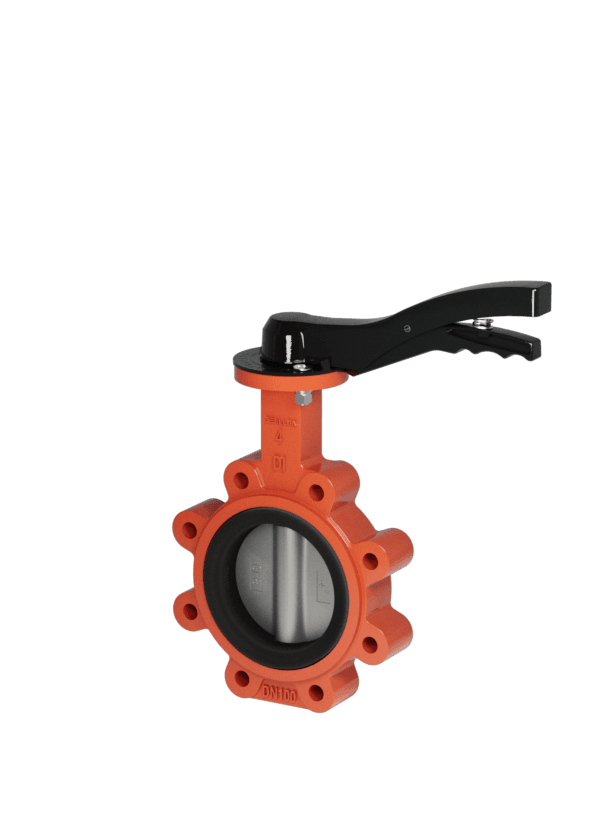
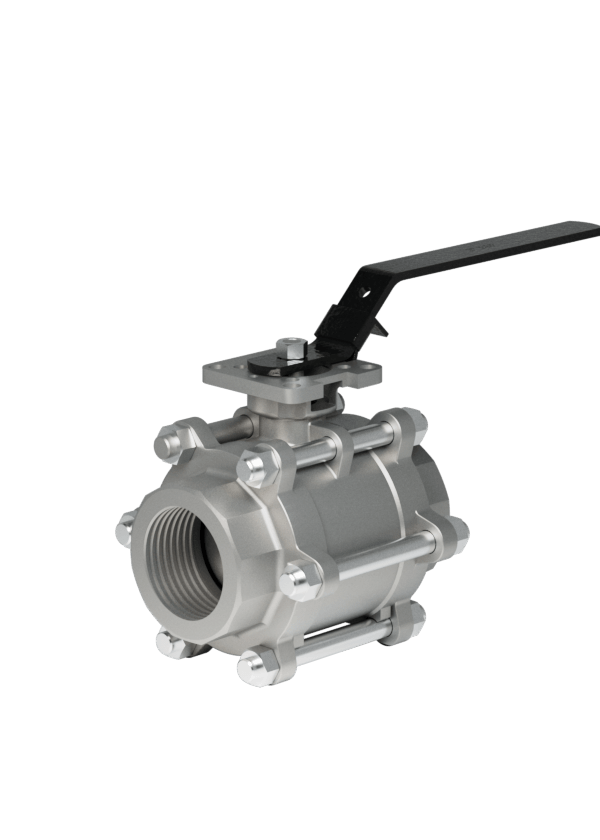
-A quarter-turn valve typically operates with a 90-degree rotation, or a "1/4 turn."
-The valve is opened or closed with just a quarter of a full rotation (90 degrees).
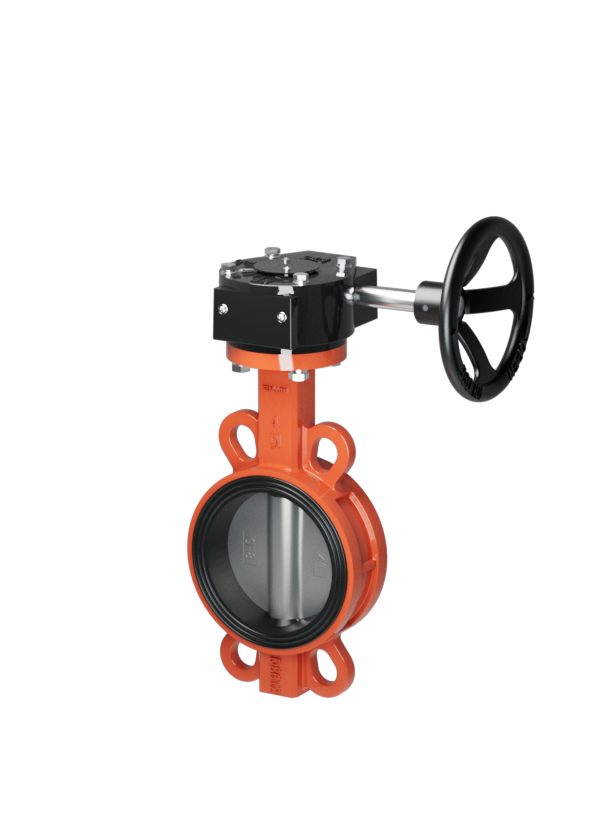
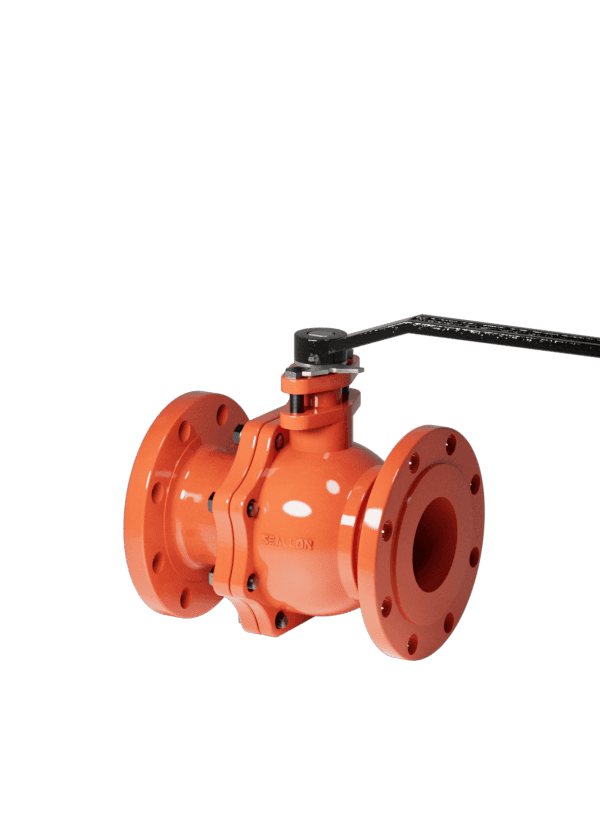
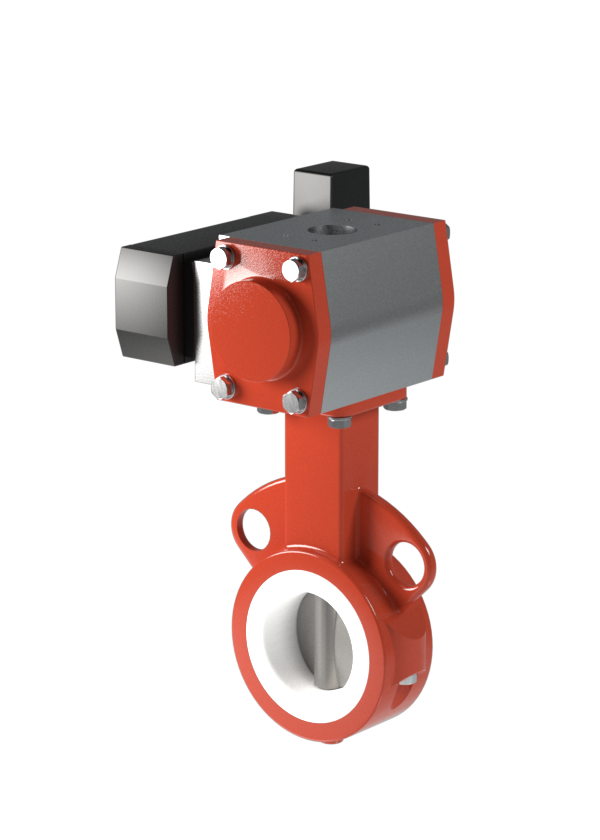
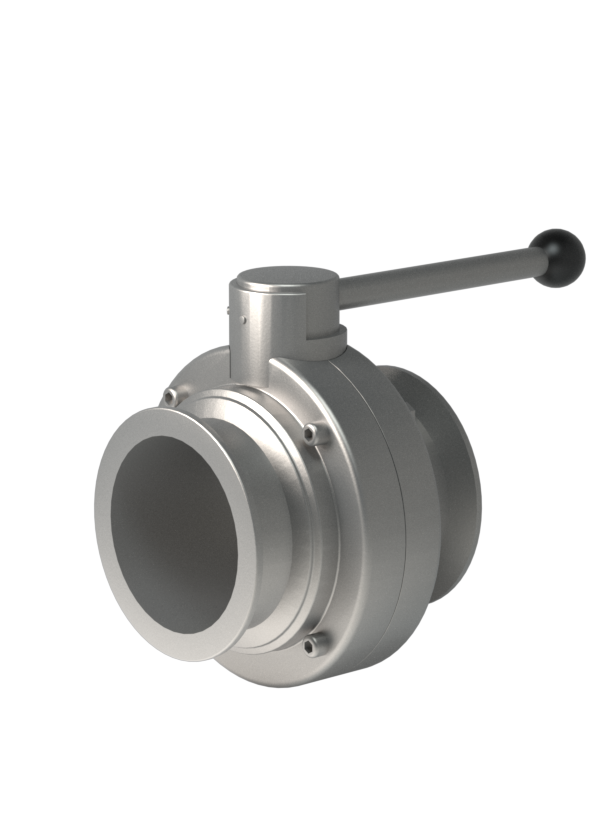
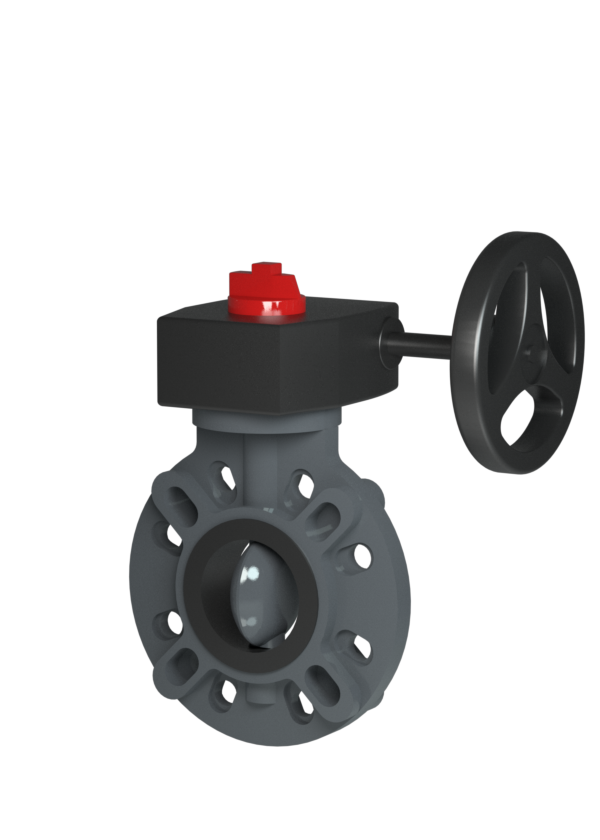
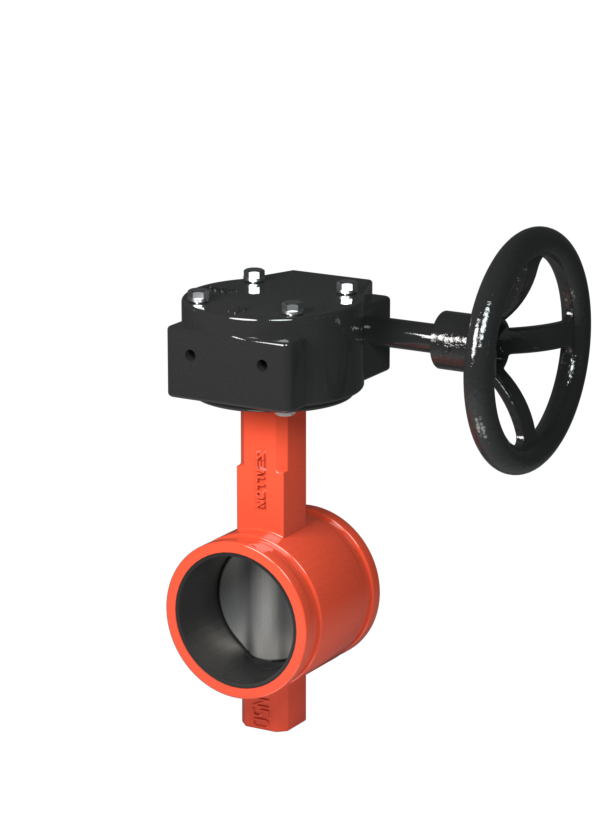
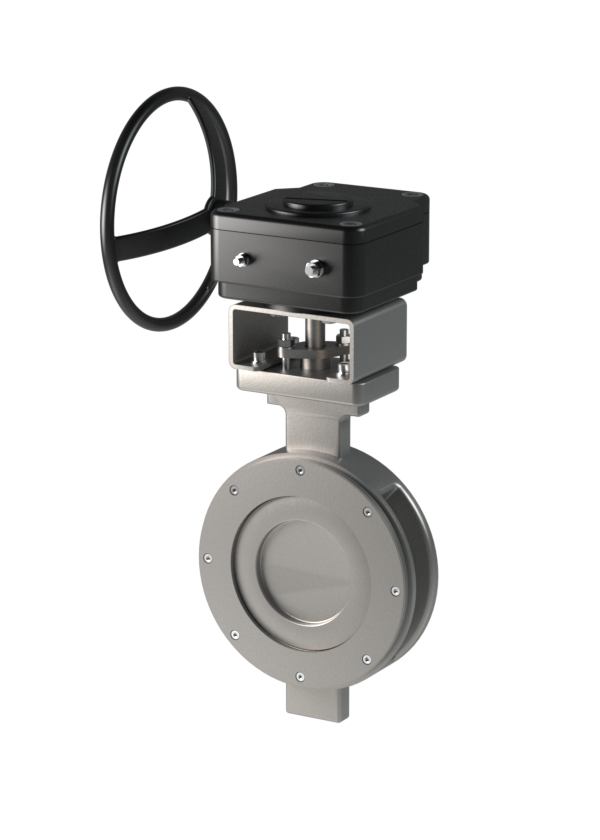
-Common types of quarter-turn valves include ball valves, butterfly valves, and plug valves.
Multi-turn valve:
-A multi-turn valve requires multiple rotations of the valve stem (usually several turns) to fully open or close.
-The rotation angle is larger, typically exceeding 360 degrees. The valve opens or closes gradually, usually through a threaded mechanism.
-Common types of multi-turn valves include gate valves, globe valves, and check valves.
2. Working Principle
Quarter-turn valve:
-A quarter-turn valve works by rotating a disc (such as a ball or a butterfly) to control the flow of the fluid. The rotation angle is small (usually 90 degrees), hence the term "quarter-turn."
-The flow passage inside the valve directly interacts with the fluid, and the valve disc rotates quickly to open or close the valve.
Multi-turn valve:
-A multi-turn valve operates based on the valve stem rotating multiple turns, which moves the valve disc (or seat) gradually. Each turn of the stem moves the valve disc a small distance until the valve is fully opened or closed.
-This type of valve is generally used for more precise flow control, as it can adjust the flow incrementally.
3. Applications
Quarter-turn valve:
-Typically used in applications where quick opening and closing are required, especially when fast on/off operation is needed.
-Suitable for situations where fine flow control is not critical. These valves are often used in clean fluid or high-pressure, high-temperature environments.
-Common applications include the oil, gas, chemical, and HVAC industries.
Multi-turn valve:
-Primarily used in applications that require precise flow control, particularly in systems with low pressure, small flow rates, or where gradual flow adjustment is needed.
-Due to their gradual flow control, multi-turn valves are usually chosen for precise control or applications that require fine adjustments.
-Common applications include municipal water supply, wastewater treatment, oil and gas, and steam systems.
4. Operation Force
Quarter-turn valve:
-The operation force for quarter-turn valves is usually smaller because the valve only requires a small rotation (90 degrees).
-They are easy to operate and are often used in automated control systems.
Multi-turn valve:
-Multi-turn valves require a greater operating force since they need to rotate several times to fully open or close the valve.
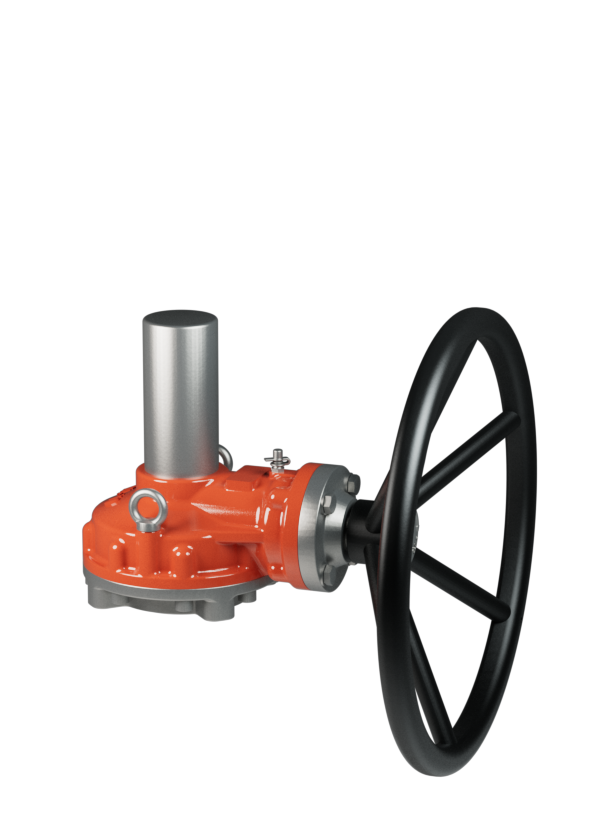
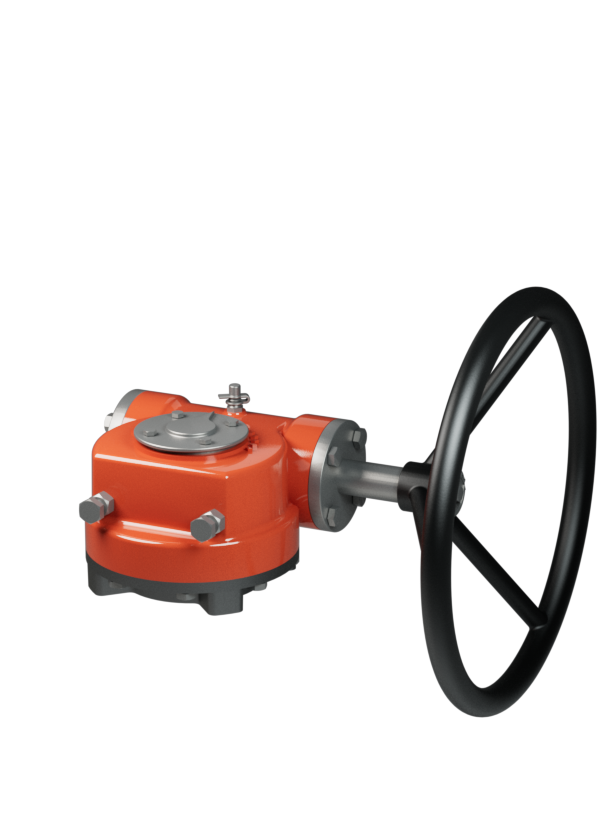
-Higher torque is needed to drive the valve disc or seat, and these valves often require gearboxes or electric actuators to assist in operation.
5. Sealing Performance
Quarter-turn valve:
-Quarter-turn valves generally provide excellent sealing, especially when fully open or fully closed. Due to their design (such as ball valves or butterfly valves), they can maintain a reliable seal, even in high-pressure conditions.
-They typically offer good sealing performance under high-pressure and high-temperature conditions.
Multi-turn valve:
-The sealing performance of multi-turn valves depends on the contact between the valve disc and seat. Due to the gradual opening and closing nature of these valves, their sealing performance may be affected by wear over time.
-High-quality multi-turn valves (such as gate or globe valves) are designed to provide excellent sealing, but they usually require greater operation force and finer adjustments.
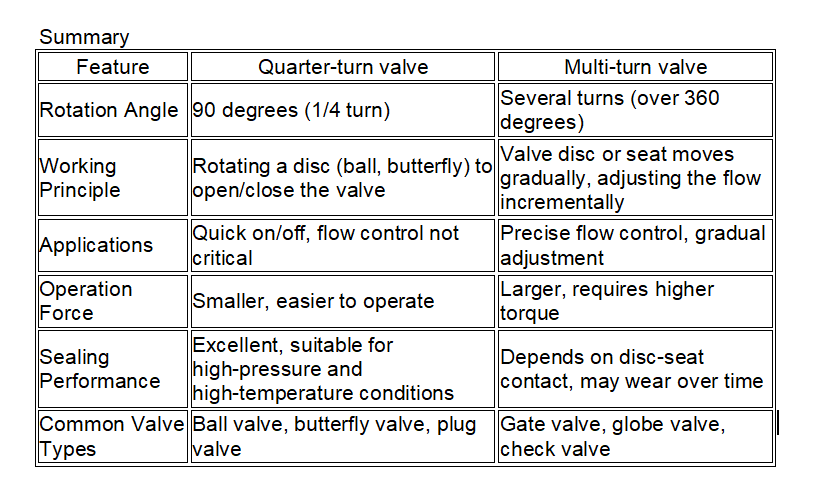
In conclusion, quarter-turn valves are suitable for applications requiring fast on/off operation and less precise flow control, while multi-turn valves are better for applications that require precise flow adjustment and excellent sealing performance.